
What Happens When AI Remembers?
Author
Ginniee | Co-Founder, SpikedAI
Lessons from Atlas, financial advisors, Spiked, and the people carrying our enterprises
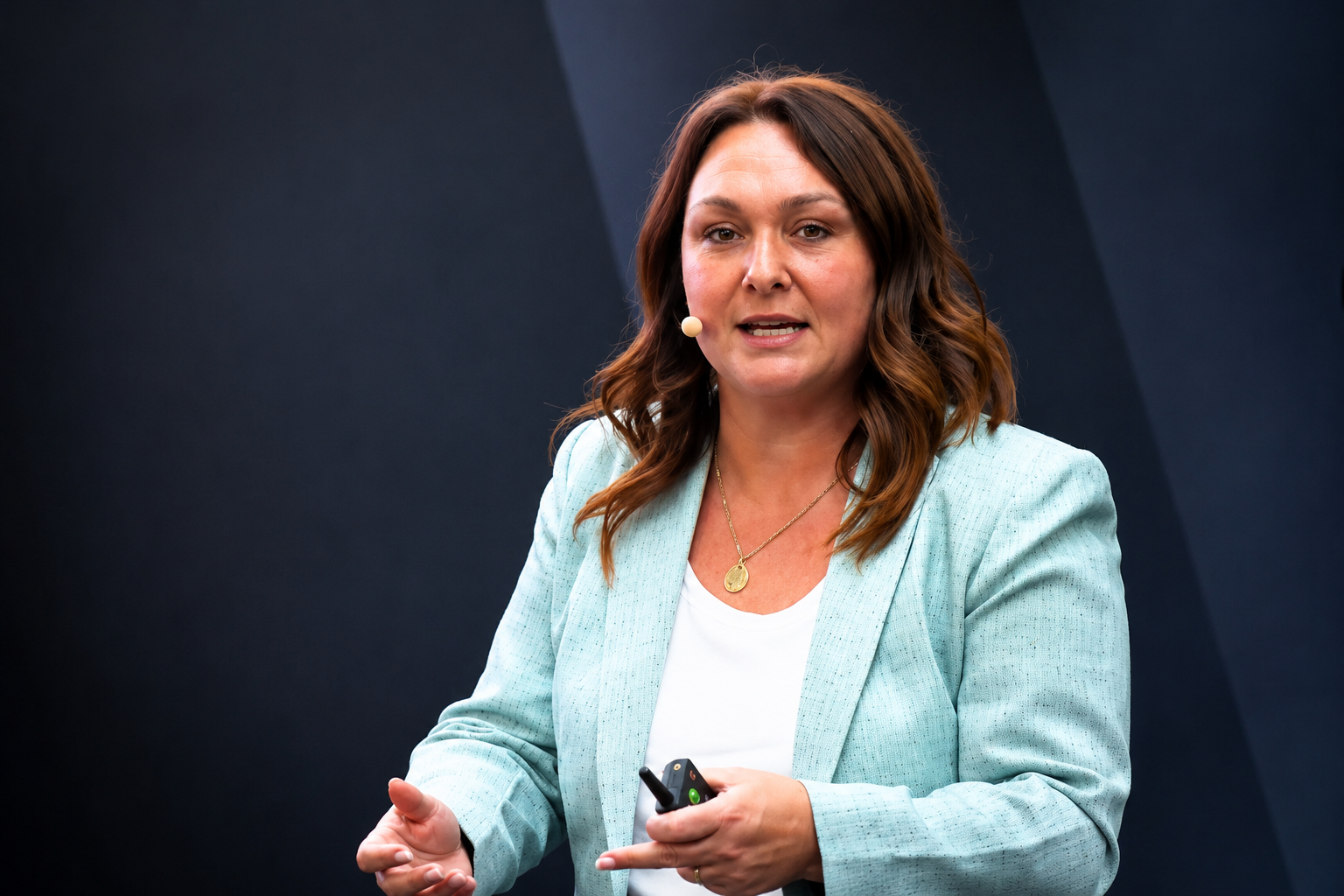
A few days ago, I watched Amanda McMaster, Interim CEO and CFO of Boston Dynamics, talk about the journey of Atlas.
Amanda McMaster of Boston Dynamics at MACHINA Summit 2026
For years, Atlas was a research robot—the one many of us watched jump, dance, and do things we could barely imagine a machine doing. Now, Boston Dynamics is moving it into commercial environments, with deployments planned at Hyundai and Google DeepMind.
But it was not the movement of the robot that stayed with me.
It was the learning.
When one Atlas learns a new skill, Boston Dynamics says that capability can be deployed across the fleet. One robot’s experience can make every robot more capable.
I kept thinking about that.
What if work inside our enterprises could learn the same way?
Not people becoming machines. Not AI replacing human judgment. But experience being preserved so the next person does not have to begin again.
My work has always been deeply rooted in regulated industries. That is why another development caught my attention: the new AI-powered meeting journey from Merrill and Bank of America Private Bank.
Before an advisor meets a client, the system consolidates recent activity and relationship insights. With the client’s consent, it captures the conversation. Afterward, it turns decisions into documentation, tasks, and follow-up.
Bank of America says the capability can save an advisor up to four hours per meeting.
Holy cow, four hours matters. But something even deeper was happening. The intelligence from the meeting was surviving the meeting.
These two developments may look unrelated. One is a humanoid robot learning to operate in the physical world. The other is a financial advisor preparing to serve a client.
But to me, they reveal the same idea:
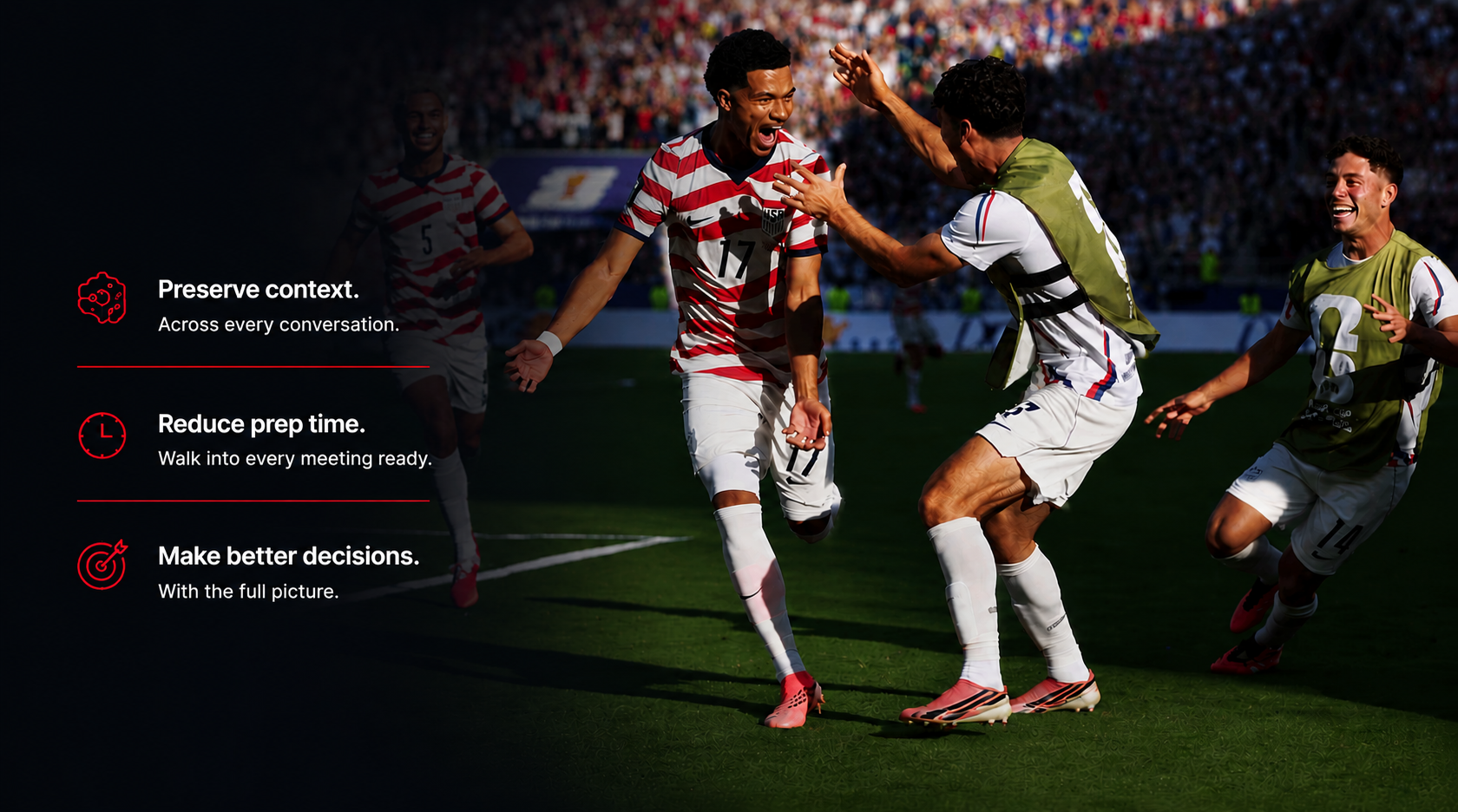
Experience, when preserved with context, should make the next moment better.
I have worked across some of the world’s most highly regulated industries. I sit in countless customer meetings. I watch from frontline teams to executives and board members, preparing for high-stakes conversations.
I have seen brilliant people search through emails, records, documents, old presentations, and meeting notes, trying to reconstruct a story their organization already knows.
A customer explains the same situation to three different teams. A commitment made six months ago disappears with the person who made it. A Forward Deployed Engineer solves a complex problem, but the reasoning behind that solution never reaches the next deployment.
The data exists. Intelligence does not move with the person who needs it.
That is not simply a search problem. It is a memory and context problem.
Storage can tell us where a document lives. Search can find the words inside it. But neither necessarily understands why a decision was made, what changed afterward, which commitment remains unresolved, or what the professional needs at this moment.
This is where I believe the next generation of enterprise AI must go. And that is why we are building SpikedAI.
Watch the perspective here:
A SpikedAI Digital Twin is not another assistant waiting for a prompt. It is not a notetaker whose job ends with a summary. It is being built to develop a governed understanding of the professional’s work. Before an important conversation, it reconstructs the relevant customer, organizational, and professional context. During the conversation, it retrieves verified knowledge and provides guidance while the professional can still influence the outcome. After the conversation, it helps preserve decisions, commitments, and next steps so the next interaction does not begin from zero.
For a Forward Deployed Engineer, that means carrying technical reasoning and customer context from one deployment into the next.
For a financial advisor, it means understanding a relationship that has developed over years, not treating every meeting as an isolated transaction.
For healthcare and other regulated industries, it means improving continuity while keeping permissions, governance, and human judgment firmly in the lead.
But memory cannot mean recording everything forever. A Knowledge Hub should not become a dumping ground where we throw spaghetti at the wall and hope something sticks. More information does not automatically create better intelligence.
Enterprise memory must understand what it is allowed to retain, who is authorized to access it, which sources can be trusted, what is relevant to the current moment, and when a human must remain accountable.
That is what makes enterprise memory different from chat history.
The Future of Knowledge Work
We started SpikedAI because we have seen brilliant people become overwhelmed—not because they lacked talent, but because the knowledge surrounding them was fragmented or unavailable when it mattered.
Physical AI is teaching machines how experience becomes capability.
Bank of America is showing how trusted context can move through a professional workflow.
At SpikedAI, we are bringing those lessons into knowledge work.
Because the next era of AI should not be defined only by how quickly a model can answer.
It should be defined by whether every experience makes the next decision better.
Every conversation compounds. Every decision strengthens the next.
We're building the infrastructure that allows every conversation to strengthen the next. If you're thinking about enterprise memory, Digital Twins, or AI for knowledge work, we'd love to show you what we're building.