
From Forward-Deployed Engineers to Forward-Deployed Intelligence
Author
Ginniee | Co-Founder, SpikedAI
Why enterprise AI's next breakthrough is not another agent, but a Digital Twin for every knowledge professional
"An FDE transforms a project. A Digital Twin compounds the capability of a person and an organization."
Ginniee | Co-Founder, SpikedAIAt RAISE Summit 2026 sessions, one message came through clearly, the AI race is moving beyond bigger models. The next battle is about turning intelligence into measurable outcomes inside real organizations.
That shift is visible everywhere.
Fireworks AI is making the case for specialized intelligence built from proprietary enterprise data. AWS has committed $1 billion to Forward Deployed Engineering. Google is expanding its Forward Deployed Engineering teams. Blunom is building a sovereign control plane for governed agents. Prometheus is pursuing AI that can dramatically accelerate physical engineering.
These may look like separate developments. I believe they are signals of the same market transition.
Enterprise AI is entering its last mile
The model is no longer the complete product. The real product is intelligence that understands the business, operates inside its constraints, improves human judgment, and turns decisions into action.
Specialized intelligence will beat generic intelligence at work
With NYSE Wired at RAISE Summit, Fireworks AI co-founder and CEO Lin Qiao argued that competitive advantage will come from specialized intelligence grounded in proprietary data. Her sharpest formulation was simple:
"Data is the moat, because it cannot be copied."
Lin Qiao | Co-founder and CEO, Fireworks AIThat matters because a general model may know the world, but it does not inherently know your customer, your organization, your history, your permissions, your risks, or the decision unfolding in front of you.
Public intelligence is becoming abundant. Private context remains scarce.
The enterprise winner will not simply have access to the best model. It will know how to combine the right model with trusted organizational knowledge, personal context, and the live signals surrounding a decision.
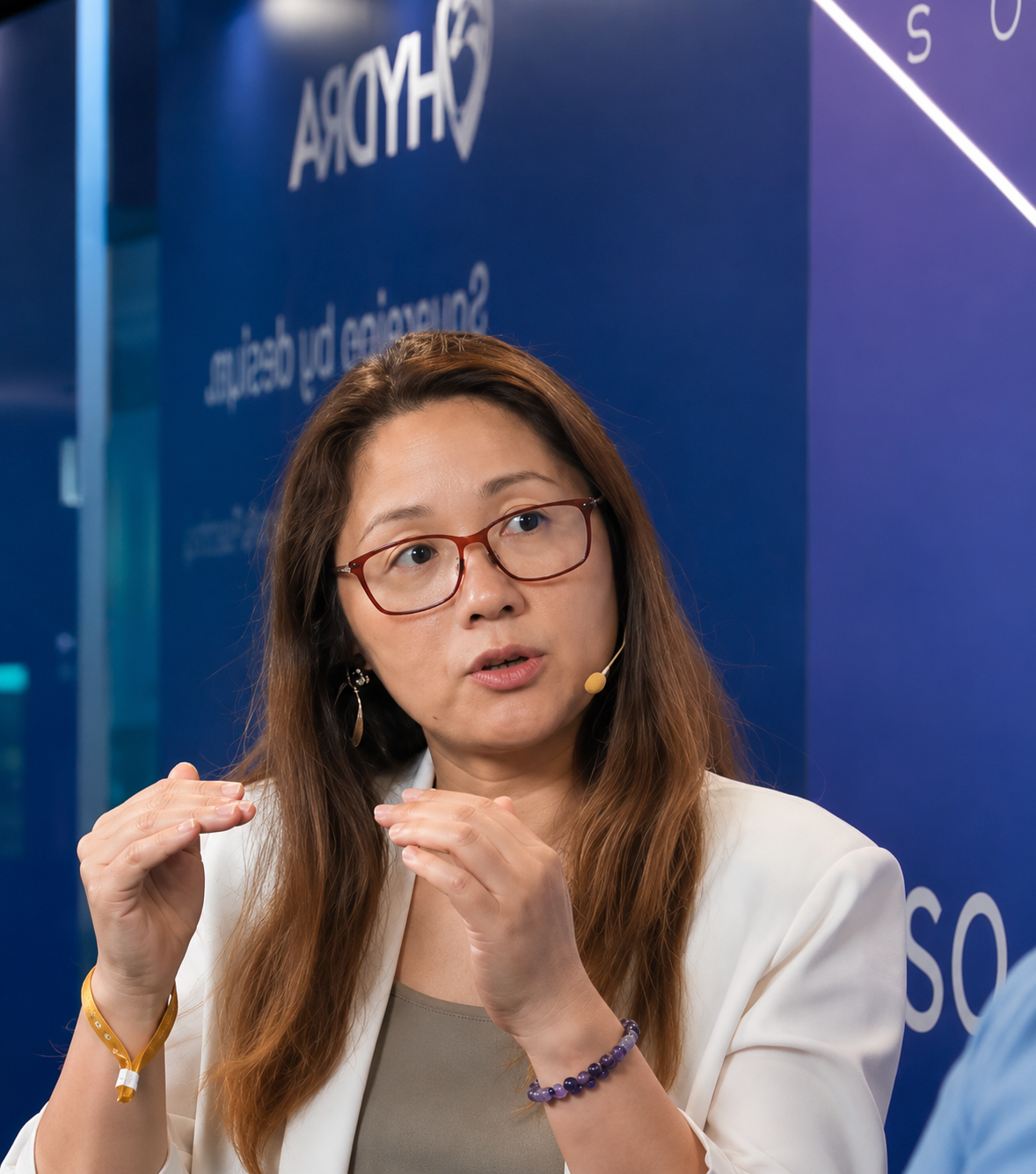
This is the beginning of a shift from general-purpose AI to individualized, contextual intelligence. Lin Qiao expands on this argument in her Fireworks AI interview, building on her discussions with NYSE Wired and insights from RAISE Summit 2026.
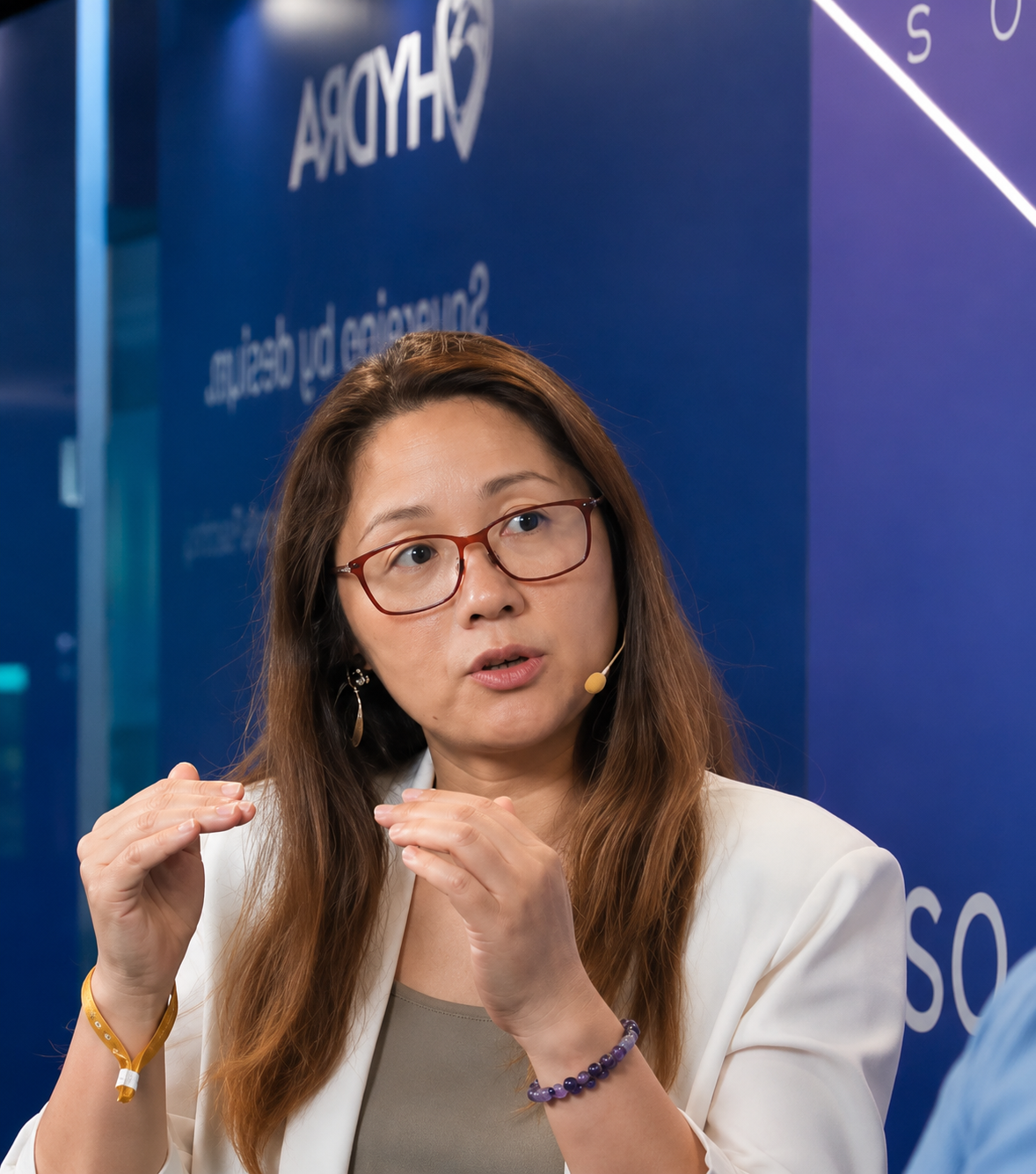
Lin Qiao at RAISE Summit 2026
The rise of the FDE exposes the implementation gap
AWS recently announced a dedicated Forward Deployed Engineering organization backed by a $1 billion investment. Its goal is to embed thousands of experts inside customer organizations and compress deployment timelines “from months to days.” Google is also expanding Forward Deployed Engineers to accelerate agentic enterprise transformation.
This validates what many enterprise leaders already know: strategy is no longer the primary constraint. Implementation is.
Companies do not need another roadmap explaining what AI could do. They need intelligence operating within their data, governance, workflows, and business reality.
The FDE model works because it brings technical expertise into the environment where the problem actually lives. It replaces distant advice with embedded execution.
But it also raises a larger question: can every company place a world-class engineer beside every team, every knowledge professional, and every important decision?
Of course not.
Human FDEs will remain valuable, particularly for complex transformation. But they are scarce, expensive, and naturally organized around projects. The next evolution is to turn the FDE pattern into an always-available intelligence capability.
The investment and operating model are detailed in the AWS Forward Deployed Engineering announcement and Google's expansion of Forward Deployed Engineers.
From governed agents to accountable intelligence
Blunom approaches the problem from another essential angle, ownership and governance. Its Sovereign AI Control Plane is designed to unify models, agents, tools, applications, and data while providing security and cost controls.
Trevor Hansen, Blunom's founder and CEO, said:
"Every company must reinvent itself or risk irrelevance."
Trevor Hansen | Founder and CEO, BlunomI agree. But reinvention cannot mean releasing hundreds of autonomous agents into an enterprise without context, accountability, or a clear relationship to human decision-making.
Agent governance is necessary. It is not sufficient.
Enterprises must govern not only what an agent can access and execute, but also how it reaches a conclusion, which knowledge supports its answer, when a human must remain in control, and whether the action improves a measurable business outcome.
The future is not autonomy at any cost. It is governed by intelligence with human accountability. Blunom describes its approach in the company's Sovereign AI Control Plane announcement.
Prometheus points to the compression of expertise
Prometheus, co-led by Jeff Bezos and Vik Bajaj, is pursuing AI for engineering and manufacturing. Bezos has described a future in which the engineering:
"Dream-build loop [can become] 10 times faster or even more."
Jeff Bezos | CO-CEO, PrometheusThat aspiration is bigger than automation. It is about compressing the distance between expertise, imagination, decision, and execution.
The same principle applies beyond physical engineering.
What if a financial advisor could enter every client conversation with the context and judgment of the firm's best advisor? What if a seller could access the knowledge, confidence, and strategic instincts of the company's strongest executive? What if a healthcare, customer success, or technical professional could receive verified answers and next-best actions in the moment, without stopping to search across systems?
That is what SpikedAI's Digital Twins solve for, scaling an organization’s best knowledge, judgment, and execution to every professional, in every critical moment.
Prometheus and the proposed 10-times-faster engineering cycle reflect a wider belief in AI as human augmentation, a position Bezos also discussed at VivaTech 2026.
The next step, a Digital Twin for every knowledge professional
This is what I see at the intersection of enterprise transformation, cloud, data, AI, and high-stakes customer decisions. Across high-tech and regulated industries, I see the same truth repeatedly, technology creates value only when it improves the decision made in the critical moment.
This is the perspective we bring to SpikedAI.
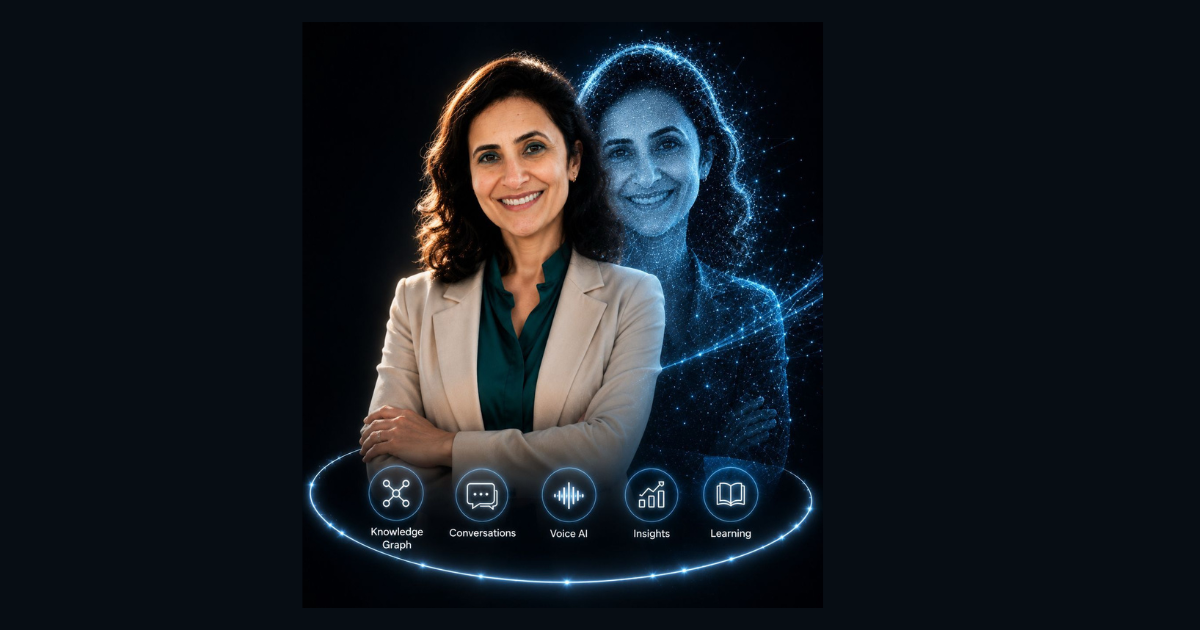
We are not building another generic assistant, an infrastructure control plane, or a collection of disconnected agents. We are building Digital Twins for knowledge professionals.
A SpikedAI Digital Twin:
Knows the individual, the organization, the customer, and the history.
Reasons across live signals, trusted knowledge, risks, and objectives.
Prepares the professional before every critical interaction.
Delivers verified answers and guidance during the moment of work.
Turns decisions into follow-ups, tasks, proposals, and system updates.
Learns from every interaction so the next decision begins smarter.
Keeps the human in control, with permissions, citations, and enterprise governance.
The distinction is important.
An agent completes a task. A Digital Twin develops continuity.
An FDE transforms a project. A Digital Twin compounds the capability of a person and an organization.
A control plane governs technology. A Digital Twin brings governed intelligence into the flow of human work.
The new unit of enterprise advantage is judgment
Models will continue to improve. Inference will become faster and cheaper. Agent platforms will multiply. Enterprises will gain more choices across clouds, models, and orchestration layers.
But the most valuable layer will sit closer to the human.
It will understand who is making the decision, what matters at that moment, which knowledge can be trusted, what action should follow, and what the organization should learn from the outcome.
The next era of enterprise AI will not be defined by how many agents a company deploys. It will be defined by how effectively the organization scales its best judgment.
Forward Deployed Engineers are proving the value of intelligence embedded inside the customer environment. Digital Twins take the idea further by making that intelligence persistent, personal, governed, and available in every critical moment.
The future of work is not human or AI.
It is every knowledge professional amplified by a Digital Twin that knows, reasons, guides, acts, and learns.
That is how intelligence compounds.
Give every FDE a Digital Twin. Explore SpikedAI Digital Twins.