

The Hidden Cost of Enterprise AI Isn't Information. It's Context.
Author
Editorial Staff
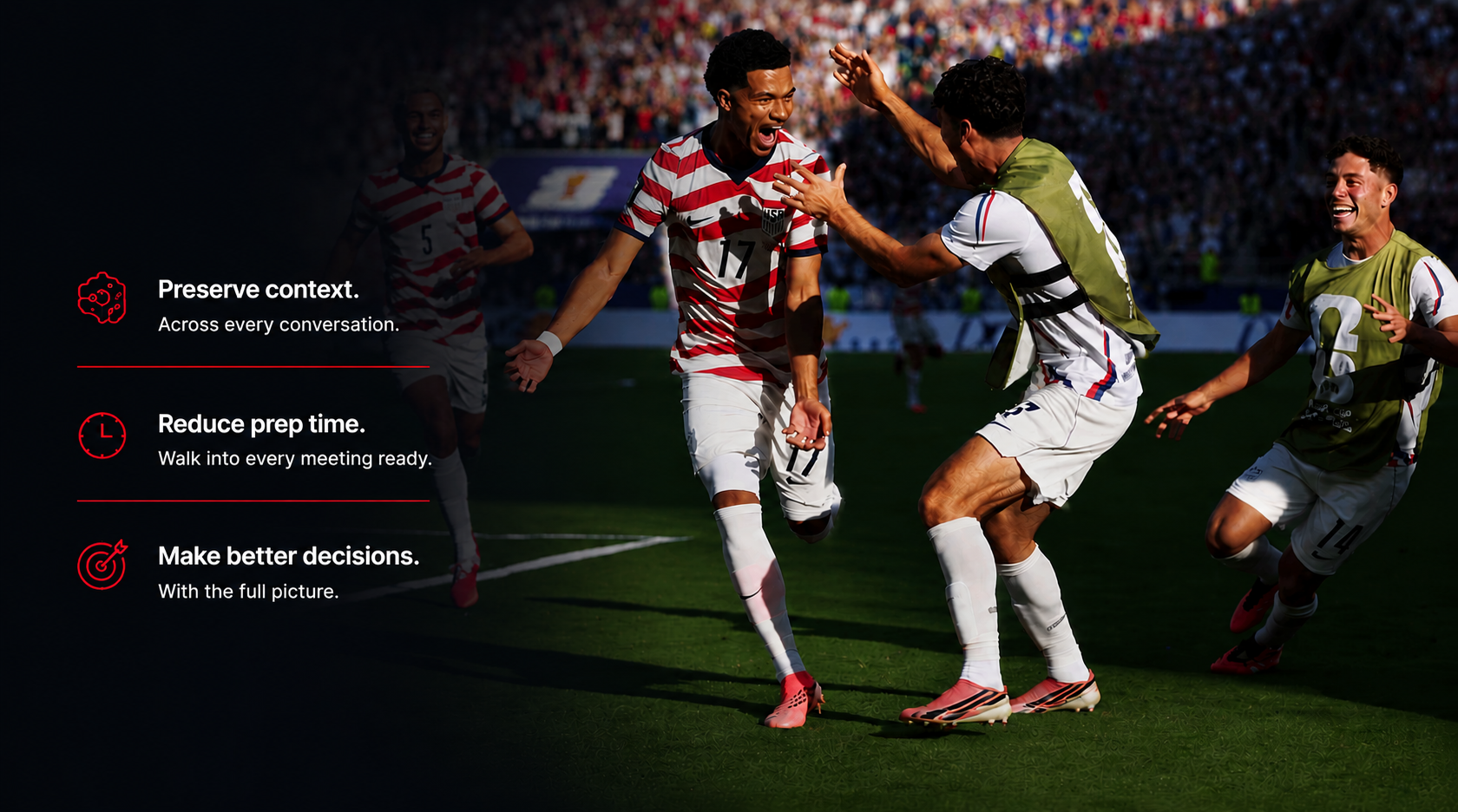
It's match day.
You're settling in to watch the game when a customer suddenly asks to move tomorrow's meeting to right now.
A year ago, you'd close the stream, open your CRM, search Slack, skim meeting notes, reread email threads, and spend twenty frantic minutes reconstructing everything that happened since the last conversation.
That hidden preparation has quietly become part of modern work.
It shouldn't have to be.
Over the past few years, AI has made knowledge more accessible than ever.
We can search millions of documents in seconds. AI can summarize meetings, write proposals, answer questions, and generate code.
Organizations have invested heavily in making information easier to create and easier to find.
Yet many knowledge workers feel busier than ever.
The problem isn't information. It's context.
Microsoft's 2026 Work Trend Index describes the modern workplace as increasingly fragmented. Employees spend much of their day moving between meetings, emails, chat messages, documents, and applications.
Researchers have long shown that every interruption carries a cognitive cost. Recovering context after switching tasks takes time, and that cost compounds throughout the day.
Enterprise work has quietly changed.
It is no longer defined by individual tasks. It is defined by conversations.
A customer meeting leads to a Slack discussion. A product review becomes an executive decision. A follow-up email introduces a new stakeholder. A support issue changes the priorities of the next sales call.
The work isn't difficult because people lack information.
It's difficult because information loses its context as it moves between people, teams, and systems.
The Challenge of Context in Customer-Facing Roles
This is particularly true in customer-facing organizations.
Before every important meeting, teams search CRM records, reread meeting notes, review email threads, scan Slack conversations, and ask colleagues what happened since the last interaction.
The information exists, but understanding it requires reconstructing the story behind it.
That reconstruction has become one of the largest hidden costs of knowledge work.
Most AI products today help us create content faster or summarize what already happened.
Those are valuable capabilities, but I believe they address only part of the problem.
The larger opportunity is helping people recover context with confidence.
Imagine beginning every meeting with a clear understanding of what changed since the last conversation. Not just the action items, but the customer priorities, unanswered questions, new stakeholders, commitments, risks, and decisions that shape what should happen next.
That is fundamentally different from reading a transcript. It is understanding the state of the relationship.
This is the point of view behind SpikedAI.
We believe the next generation of enterprise AI will not be measured by how many meeting summaries it produces. It will be measured by how effectively it helps people make decisions in the moments that matter.
For us, AI is not simply about generating more content.
It is about preserving context, reducing cognitive load, and allowing people to spend less time reconstructing the past and more time shaping the future.
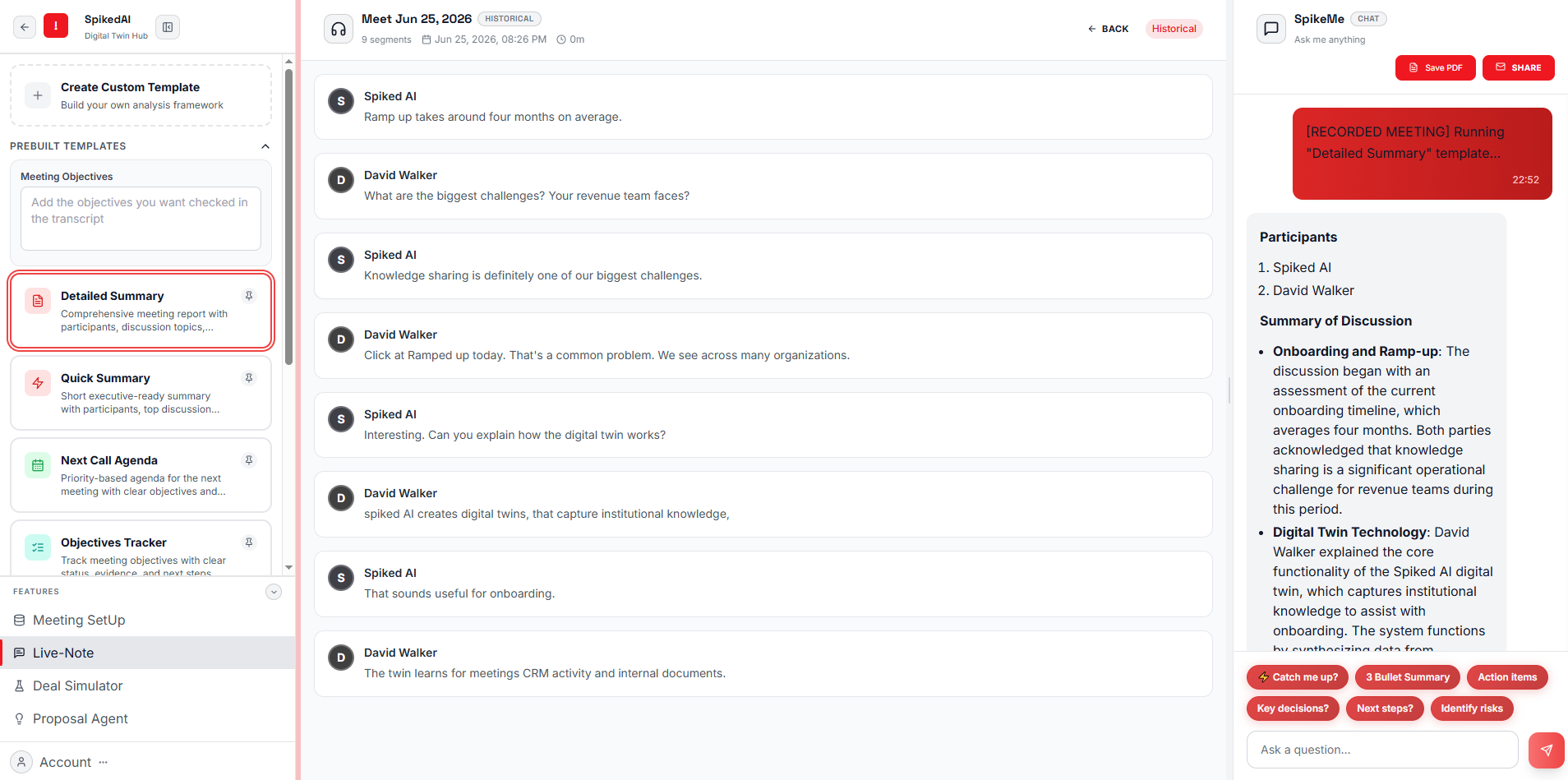
Before your next meeting, just ask. Your Digital Twin already has the context.
The organizations that move fastest over the next decade will not be the ones with the most information.
They will be the ones that can carry context forward, from one conversation to the next, from one team to another, and from one decision to the next.
While you're watching the match, your Digital Twin is making sure your next conversation starts with the full score.