
When AI Gets Smarter, Why Does Work Feel Harder?
Author
Ginniee, Co-Founder & CRO, SpikedAI
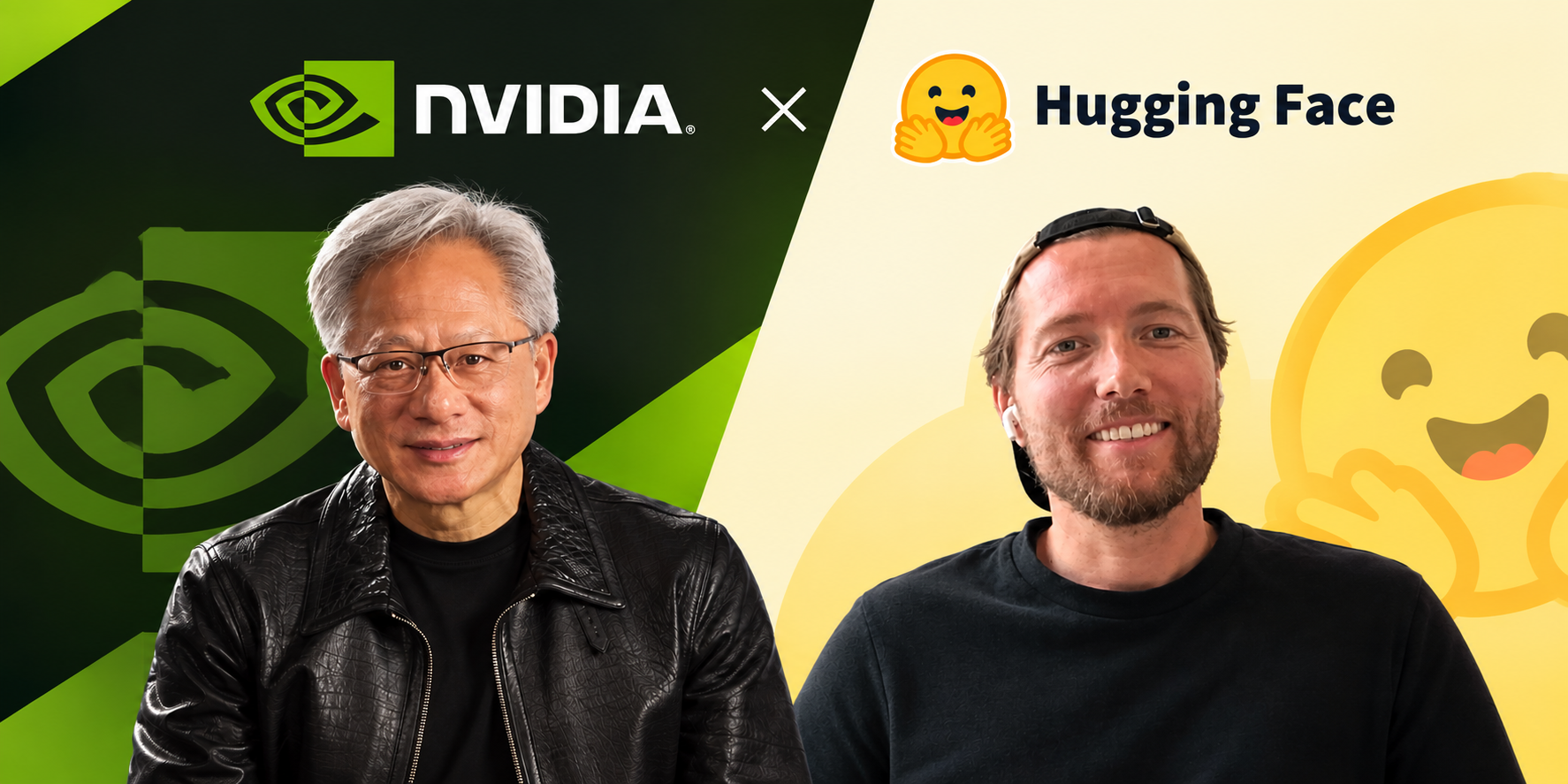
On September 3, 2026, NVIDIA announced that it had agreed to acquire Hugging Face for approximately $12.9 billion. The news brought together two companies representing different but deeply connected parts of the AI revolution: NVIDIA, whose infrastructure powers much of modern AI, and Hugging Face, which has become home to more than 18 million developers, 200,000 companies, and over three million models.
The acquisition is another sign that the future of AI will not revolve around one dominant model. It will be an expanding ecosystem of open and proprietary models, each designed for different tasks, industries, costs, and operating environments. For builders, this abundance is exciting. For the people expected to use it at work, it may create an entirely different experience.
I began thinking about this during an ordinary day filled with customer conversations. Before joining a meeting, I moved between email, CRM records, presentation slides, internal messages, account notes, case studies, and an AI assistant. The information I needed existed, but it did not exist in one place, or in a form that followed me.
When the customer raised an unexpected question, I had to remember a discussion from several weeks earlier, connect it to a product decision, consider its commercial impact, and respond without losing the momentum of the conversation.
The problem was not access to information. The problem was carrying the right context into the moment when it mattered.
This is the hidden pressure now falling on knowledge workers. With every new model and application, we gain another capability, but we may also inherit another interface to learn, another source to check, and another decision about which form of intelligence to trust.
Amazon Quick can connect research, business intelligence, and workflow automation.
Salesforce Agentforce can use customer data to answer questions and take action.
Claude Code can reason through complex technical problems and execute multistep development work.
Each is powerful, but each introduces another environment whose information, reasoning, and actions must be connected to the rest of the business.
Someone must still bring together the customer history, product knowledge, technical details, legal boundaries, financial implications, and human relationships surrounding the work. Despite all our investment in AI, that integration layer is still often the person sitting in the meeting, trying to hold everything together.
The strain is already visible. Microsoft’s workplace research found that employees are interrupted by a meeting, email, or notification every two minutes during core working hours. The Work Trend Index reported,
This creates a difficult contradiction: organizations are adopting AI to increase capacity, but many employees experience that adoption as another layer of complexity added to an already fragmented day.
At every juncture, I have seen how quickly a conversation can move across disciplines. A pricing question becomes a technical discussion. The technical answer creates a product commitment. That commitment introduces a legal concern, which changes the economics of the deal.
In those moments, the cost of missing context is not merely a few minutes spent searching. It can become an unnecessary concession, an unmanaged risk, a promise the organization cannot keep, or a customer signal that disappears before anyone acts on it.
The work demands more than information retrieval. It demands continuity across people, systems, meetings, and decisions.
The AI industry often describes context in technical terms: the size of a model’s context window, the number of tokens it can process, or the amount of information that can fit inside a prompt. These advances matter, but a larger context window is not the same as continuity.
A model may understand the contents of one meeting. A knowledge worker must understand why the meeting is happening, what changed during the last one, how the customer reacted, which commitments remain unresolved, and what the organization is prepared to do next.
A context window holds information for a task. Continuity carries understanding from one consequential moment to another.
That distinction became central to what we are building at SpikedAI. I do not believe knowledge workers need another AI application they must remember to open and manage. They need a Digital Teammate that moves with them through their work.
It should enter a customer meeting already understanding the account history, the people involved, the objectives, the unresolved issues, and the decisions made along the way. If the conversation becomes technical, it should bring forward the perspective of a technical specialist. If the customer challenges the roadmap, it should surface the relevant product context. If a concession introduces risk, it should identify the legal or financial implications while there is still time to respond thoughtfully.
The human must remain responsible for the decision. SpikedAI’s role is to make sure that decision is not made without the right context.
As the Digital Teammate participates in conversations, the Digital Twin becomes the person’s persistent memory. It remembers what matters, learns from each interaction, and relearns when priorities or assumptions change. It carries decisions and commitments into the next meeting, builds follow-up tasks, and helps prepare the next agenda while the human continues moving through the work.
Technically, this requires more than storage or placing more information inside a larger context window. A Digital Twin needs a living memory architecture, working memory for the conversation in progress, episodic memory for previous meetings and decisions, and organizational memory grounded in systems such as CRM, product documentation, contracts, and approved policies.
It must retrieve only what is relevant, preserve the source and timing of each piece of information, respect permissions, and recognize when older context has been replaced by a new decision. It must remain transparent and correctable, allowing people to understand what it knows, fix what it misunderstood, and control what it carries forward.
Intelligence may come from different models, but the continuity must belong to the person. Trust cannot be added after the intelligence has been built. It must be part of how the teammate works from the beginning.
The NVIDIA–Hugging Face announcement shows how quickly the supply of AI intelligence is growing. We will have more models, more specialized capabilities, and more ways to deploy them. These are powerful developments, but their value will ultimately depend on what happens to the person at the center of the work.
If every advance leaves that person responsible for choosing the model, assembling the context, checking the answer, remembering the history, and creating every next step, then AI may accelerate the work without truly reducing its burden.
The next important breakthrough may not be another model that a knowledge worker must learn to use.
It may be a Digital Twin that becomes their persistent memory, and Digital Teammates that absorb the complexity, carry the context, build the next actions, and work alongside them through every conversation.