
Before an Enterprise Can Have a Digital Twin, It Has to Remember
Author
Ginniee, Co-Founder & CRO, SpikedAI
I was reading Isabelle Bousquette’s conversation with ServiceNow Chief Innovation Officer Dave Wright, and there was one part I kept coming back to.
Wright believes one of the bigger opportunities ahead for enterprise AI is the creation of a digital twin of an entire company. In his telling, a business could eventually model a decision before making it: What would happen if we lowered prices? Entered a new market? Faced a new regulation? The digital twin could help leaders understand how a decision might travel through the organization before they commit to it.
It is an ambitious idea. It also feels considerably less far-fetched than it would have a few years ago. Wright himself has seen that shift. When he discussed digital twins of CEOs with executives in 2021, the response was essentially that the technology wasn't ready. By 2023, executives were asking when they could buy it.
There is another part of this problem that I think about a lot.
Before we can build a useful digital twin of an enterprise, we have to ask what, exactly, we are trying to replicate.
A company isn't only its ERP system, CRM records, data warehouse, policies and workflows. It is also the accumulated judgment of the people who work there. It is the conversation with a customer that changed the direction of a deal. It is why an executive made a particular commitment, why an architect rejected one design in favor of another, or why a relationship manager knows that a seemingly routine request from a client is anything but routine.
That information exists. The problem is that much of it doesn't persist.
I have seen this repeatedly in large enterprises. A strategic customer can interact with an account executive, a technical specialist, a product team, and senior leadership, sometimes within the same week. Each person leaves the conversation knowing something the others do not. The CRM captures part of it. Meeting notes capture another part. Email and collaboration tools contain more. And a surprising amount remains with the people who were actually in the room. Then the next meeting begins, and some portion of the organization reconstructs the customer all over again.
We have spent enormous amounts of money solving the enterprise data problem. AI is now making it possible to retrieve and reason over that information at remarkable speed. But access to information is not the same as understanding context.
A model can retrieve the last proposal, summarize the last meeting, search product documentation, and reason across large amounts of enterprise knowledge. The harder question is whether it understands that the customer’s priorities changed between the last proposal and today’s meeting, whether an objection raised three conversations ago was ever resolved, or whether today’s technical question is connected to a commercial commitment made by someone else six weeks earlier.
And, importantly, can it carry that understanding into what happens next?
"The next enterprise AI advantage won’t come from simply having more data or a smarter model. It will come from preserving the context, judgment, and institutional memory that make those models useful."
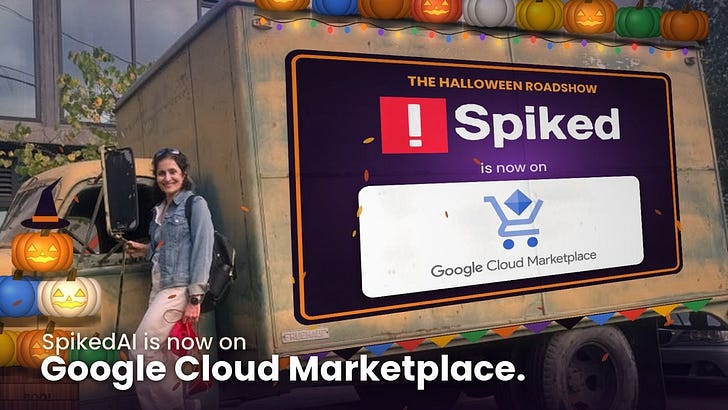
Ginniee, Co-Founder & CRO, SpikedAIThat is a large part of what we are working on more deeply with our customers at SpikedAI. We are working with customers to build AI Digital Twins for their knowledge professionals, Digital Teammates designed to carry context across conversations, connect institutional knowledge, surface intelligence in real time, and help people make better decisions while keeping humans firmly in the lead. The objective is not simply to give someone another AI assistant. It is to create intelligence that becomes more valuable as context compounds.
We started with the individual knowledge professional because that is where so much enterprise context is created in the first place. A Digital Twin that accompanies a person through their work can begin to connect things traditional systems tend to separate: conversations, institutional knowledge, relationships, decisions, and actions. Before an important meeting, it can understand what has happened. During the conversation, it can recognize what is changing and surface relevant intelligence. Afterward, it can carry forward the decisions and context that otherwise risk being reduced to another transcript or set of notes.
The interesting part comes when you think beyond one person. If context can persist across an individual’s interactions, it can begin to connect across a team. As it connects across teams, an organization starts developing something closer to institutional memory, not simply a repository of everything that has happened, but an understanding of what happened, why it mattered, and how it should inform what happens next.
That brings me back to Wright’s Enterprise Digital Twin. A simulation is only as useful as the representation of reality underneath it. If an Enterprise Digital Twin knows the systems but not the decisions, the workflows but not the exceptions, the customer record but not the relationship, it may be a technically sophisticated model of an incomplete company.
This is why simulation becomes so interesting. Once AI has sufficient context about an organization, its people, decisions, relationships, constraints, and history, we can begin moving beyond asking, “What happened?” toward asking, “What happens if?” What happens if a new regulation takes effect? What happens if we change pricing? Enter a new market? Change a product strategy? What happens if a strategic customer changes direction?
That is a very different future for enterprise AI. Models will get better. Compute will get better. Agents will become more capable. But every company possesses something a foundation model does not arrive with: its own history, its conversations, decisions, relationships, failures, exceptions, and institutional judgment.
Perhaps the next competitive advantage will not come from which company has access to the smartest model. Those capabilities will continue to spread. The advantage may come from which organizations can preserve their accumulated context and turn it into intelligence that continuously learns and compounds.
"As enterprises prepare for a future where every knowledge worker has a Digital Twin, those Twins will need to remember."
Ginniee, Co-Founder & CRO, SpikedAIWe are engaging more deeply with our customers around this, and we believe it deserves a much bigger conversation.