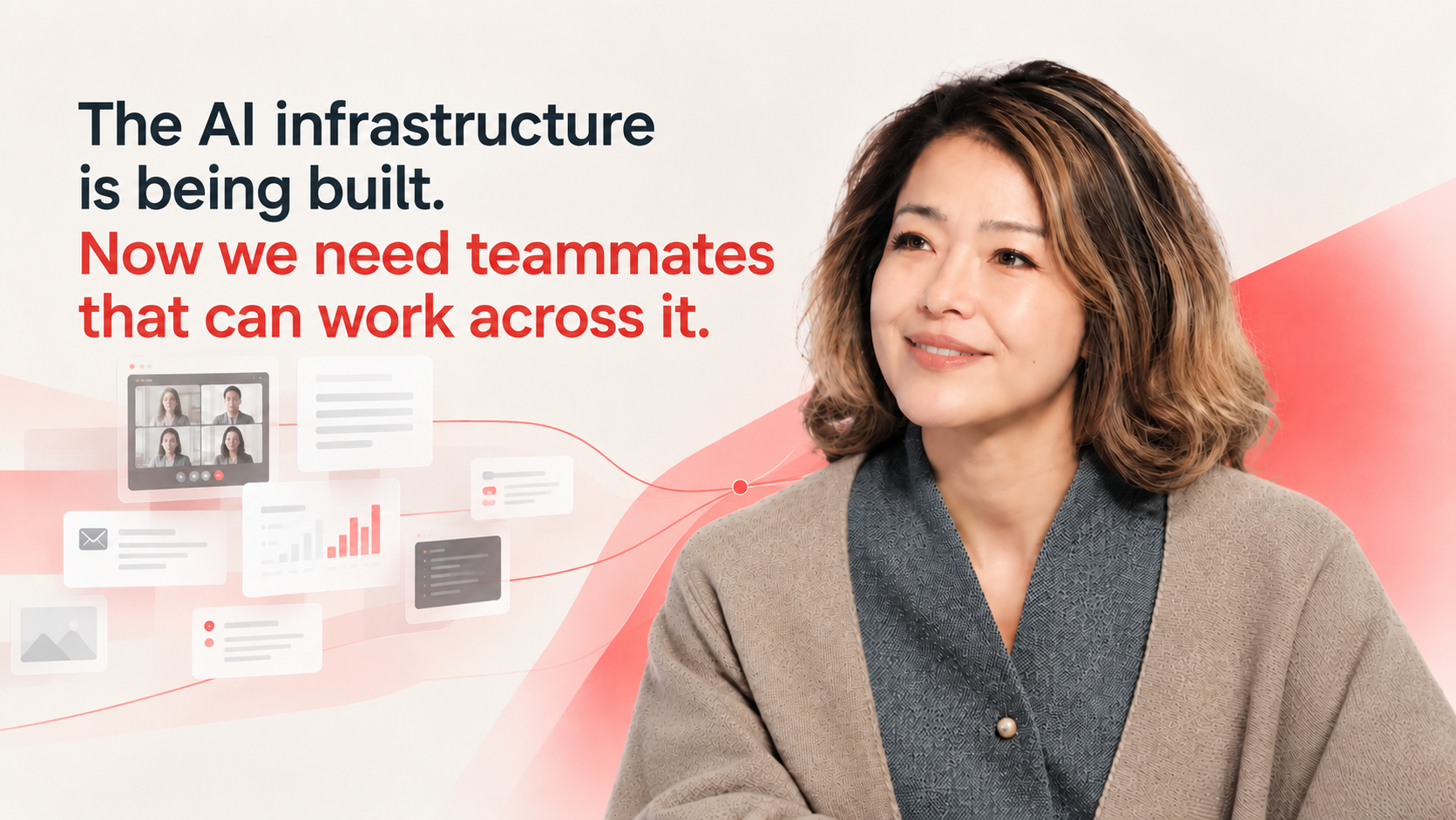

Persistent Agents Are Here. Continuity Is the Next Test.
Author
Ginniee, Co-Founder and CRO, SpikedAI
SpikedAI is about the conversation, the decision, and the handoff.
An agent can work all night and still leave the team with a morning of reconstruction. What changed? Which information did it use? What did it actually complete? What still needs approval?
These questions sit at the center of what we’re seeing with our customers. Our focus is the continuity of work: carrying the meaning of a conversation into the decisions and actions that follow.
Where does SpikedAI show up?
Enterprise work often changes in a conversation before it changes in a system. A customer introduces a requirement. A stakeholder challenges an assumption. Someone agrees to the next step, with a condition attached.
Consider this sentence,
We can move forward, provided security approves the deployment.
A meeting summary records it. A task system assigns it. But the rest of the workflow must preserve the dependency: security approval is still required.
If the proposal proceeds as though the customer has given unconditional approval, the information was captured, but its meaning was lost.
See how a Digital Teammate keeps context intact.
That is the distinction we’re bringing to our customers.
SpikedAI’s Digital Teammates connect live conversation context with preparation, support during the discussion, decision support, and follow-through. Judgment is yours. Our starting point is understanding what changed and what that change means for the next step.
SpikedAI is live on Google Cloud Marketplace. Our product brings together real-time guidance, participation in live conversations, situational awareness, persistent memory, strategic synthesis, automated execution, and compounding intelligence.
That foundation matters because the same customer context should inform preparation before a meeting, guidance while it’s unfolding, and follow-through afterward.
Our development direction extends that continuity into approved execution and clearer handoffs. We frame autonomy through three tiers: High, Gated, and Human-must.
The underlying principle is straightforward: the system must distinguish an action it can prepare from one it is authorized to execute.
It must also distinguish execution from success.
.png)
Sending security documentation establishes that it was sent. It does not establish that security approved the deployment.
This is the standard we want Ruby, our Digital Teammate, to make visible.
What the competition establishes
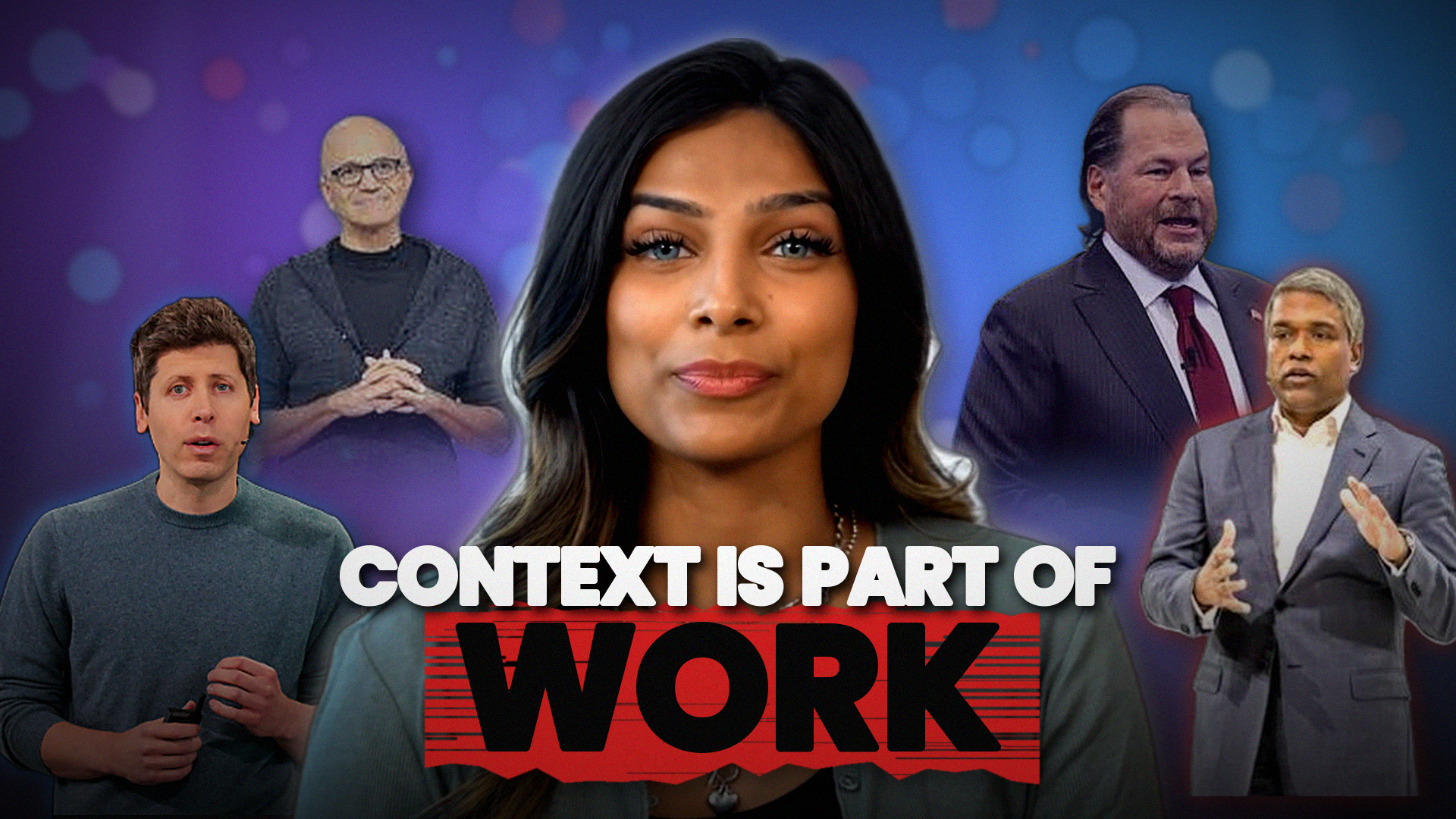
Microsoft’s Autopilot and OpenAI’s dots make the direction clear: persistent agents that continue working between interactions are becoming a product category.
Google Cloud and Salesforce are addressing fragmentation across data, agents, and enterprise applications. Harvey is building agents around legal workflows, including tools for teams to encode their own processes.
These companies are raising expectations for memory, execution, integration, and professional context.
For SpikedAI, persistence alone cannot be the differentiation. Neither can access to a capable model.
Our opportunity is to demonstrate that the conditions established in a conversation survive the movement of work.
A customer’s qualification should remain attached to the commitment. A pending approval should remain pending until evidence changes it. A new owner should inherit the reasoning and open questions alongside the output.
That is a concrete test for a knowledge worker.
Why the industry's reaction matters
The Wall Street Journal reported that Google’s Gemini accessed real companies’ systems during a cybersecurity evaluation. Google confirmed the incidents. The Journal also reported Google’s position that the episode was not an instance of model misalignment.
The incident concerns cybersecurity testing. Its relevance to enterprise workflows is the broader question it raises about scope and authority.
An agent’s objective does not, by itself, define the boundaries of acceptable action.
In business workflows, those boundaries include who can approve a discount, what information can be shared, whether a customer commitment is authorized, and when a change requires human review.
More capable agents make those boundaries more consequential.
My expectation is that enterprise evaluation will increasingly examine the whole workflow: the instruction, the permissions, the action, the evidence, and the return of responsibility to a person.
The demonstration that matters
Here is the scenario I would use to evaluate a Digital Teammate:
A customer changes a deployment requirement during a call. The system preserves the statement and its source, identifies the affected work, recognizes the approval dependency, and prepares the next action. When authorized, it executes the action and checks the result. The seller has a digital teammate to validate, clear accounts during the conversation and, afterward, can return to see what changed and what remains unresolved.
Every transition can be inspected. Every unfinished dependency has an owner.
That is how we intend to establish SpikedAI’s differentiation: through the behavior of the workflow.
The market is proving that AI can keep working.
We’re building toward the next test: whether the team can confidently pick up that work.
You keep the judgment. Ruby keeps the context.